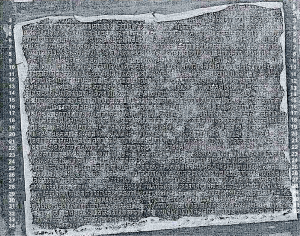
Dhār (Dist. Dhār). Prakrit Inscription (IN060009) praising Bhoja and the Paramāra lineage, estampage. (Courtesy: Tripathi et al, ASI report 2024 and ZENODO).
Below are the surviving portions (in bold) with tentative restorations, Sanskrit chāyā and English glosses. In some cases commentarial notes are added.
Verse 211
[* payā vē ṇa vi bhā si a gu || ṇa vaṁ sa] yāsā rabhāa kayā [*pū ri a di mu khā ||]
Sanskrit chāyā: pratāpēna vibhāsita-guṇa-vaṁśaḥ yaśaḥ-sāra-bhāyā kṛtāḥ pūrita-dik-mukhāḥ
English Gloss: By the king’s majesty, the lineage of his virtues is illuminated; the faces of the world’s quarters are made full by the essential light of his fame.
Verse 218
[* sa ma ra ra ṇa vi gu ṭi ta || net ta sa ma va li a sar || ma] ra ṇa gautinettasmavaliassma ||
Sanskrit chāyā: samara-raṇa-viguṭita-nētra-samavalita-śarma raṇa-viguṭitanētrasamavalitaśarma
English Gloss: The enemies’ eyes were twisted and distorted in the heat of battle; their peace and well-being were utterly overturned in the combat.
Verse 225
[* ma hu ra ma hu si ri bhō a || na hu vi mha yā ō vi li || hi a] cchā – u ||
Sanskrit chāyā: madhura-madhu-śrī-bhōja na khalu vismayāḥ vilikhitā vāñchā – u
English Gloss: O sweet king, Illustrious Bhoja, it is indeed no wonder that these words were inscribed on stone according to your desire.
Verse 226
paḍamaṁ cia muniūṇaṁ pattha rahia ūhu kesu [* vi li || hi a gu ṇā ta va bhō a na hu vi mha yā ō ||]
Sanskrit chāyā: prathamaṁ caiva jñātvā prastara-rahita-mukha-kēṣu vilikhitāḥ guṇāḥ tava bhōja na khalu vismayāḥ
English Gloss: Having first mastered the art of inscription, even on stone-faces previously devoid of carving, your virtues, O Bhoja, were written; this is no cause for surprise.
Verse 232
[* tuh-e ha dhī | rā | ā pa ra mat tha vi a ṇā || ha dhī | rā || ā tē | ṇa kiṁ | ka yaṁ | ho i | jē ṇa sē | sā | dha rī | ā ||
Sanskrit chāyā [tava-iha dhī | rāḥ | ātma | para | mārtha | vid | jñāḥ] || aha dhī | rāḥ || tēna | kiṁ kṛ | taṁ bhava | ti | yēna śē | ṣā | dharī | trī ||
English Gloss: O wise ones here [who know the supreme truth], what [great effort] has been done by him? By whom the rest of the Earth is [held so easily], what [further labor] could indeed be achieved by him?
Verse 233
kum massa ek ka rē hā a tu ha rē hā a ē phu ḍaṁ ma haṁ ka ha su | vi lē han ta [* na ha si ri bhō a ||]
Sanskrit chāyā: kūrmasya ēkarēkhā ca tava rēkhāyāḥ sphuṭaṁ mahyaṁ kathayasva | vilekhayan na khalu śrībhōja
English Gloss: Tell me clearly the difference between the single line of the tortoise and your own line! O Illustrious Bhoja, surely you are not merely scratching/inscribing these marks without deeper meaning.
Commentarial note: Intertextuality with the Kūrma inscription (IN060010), first poem: verse 35: vaḍattaṇassa rehā ekkā kamaḍhassa… The gist here is that the ‘line’ on Kūrma’s shell is a natural mark of destiny, the poet arguing that Bhoja’s ‘line’ (his decrees, actions and temple inscriptions) is the new mark of cosmic order with Bhoja not just supporting the world but re-inscribing it.
Verse 239
[* ni a sa la gu ṇa sa] sasaṁ juttaṁ || kitti dhaya dāū ṇaṁbho ēṇakau dha yārō ho ||
Sanskrit chāyā: nija-sakala-guṇa-saśakta-yuktaṁ kīrti-dhvaja-dattvā bhōjēna kauthukāt-ārōhaḥ
English Gloss: Having raised the banner of fame joined with all his own virtues, King Bhoja made his ascent to glory out of wonder and delight.
Verse 240
ma ha yā muṁ ḍī rē [read: mu ṇ ḍī ra] kē ā ri ta ha yā sōm ma || nā ham mi rā mē sa rē a vi hi aṁ paṁ cā ya || ya ṇaṁ ta ē bhō [*ta va ka ya vi || hi aṁ ||]
Sanskrit chāyā: mahatā muṇḍīra-muṇḍīrē kēdāra-tathā Somnāthē Rāmeśvaram-avihitaṁ pañcāyatanaṁ tvayā bhōja kṛta-vihitam
English Gloss: O Bhoja, you established great temples at Mundira, Kedara (Kedarnāth), and likewise the five-shrine complexes (pañcāyatana) at Somnāth and Rāmeśvaram.
Verse 246
[* ek kē ṇa vi su ray a pu ha || ï ja ya] yāēk kekkō pāvaē la kkhama – ? ||
Sanskrit chāyā: ēkēna api sutṛpta-pṛthivī-jaya yaikaikakaḥ prāpya lakṣma – ?
English Gloss: Even by one single victory over the earth, each and every person obtains the mark of greatness.
Verse 247
vatthu sahāvā acchai sāsa yānā ṇaṁca accha evam || hē taṁs sēkā uṁic chaijā ṇaṁka ra ṇēaū hukiā ||
Sanskrit chāyā: vastu-svabhāvaḥ tiṣṭhati śāśvatānāṁ ca asti ēvam hētōs-tasya kartu-micchāyāṁ karaṇēna khalu kṛtā
English Gloss: The nature of things remains constant, and thus it is for eternal truths; because of his desire to act, this monument was established through his agency.
Verse 253
[* bhō a pa yā vē ṇa vi bhā si || a pu ha ï ra ya ṇā vi ||] vāriāā humayā ||
Sanskrit chāyā: bhōja-pratāpēna vibhāsita pṛthivī-ratna-api vāritā khalu mayā
English Gloss: The jewels of the earth are illuminated by the majesty of Bhoja; indeed, they have been kept safe by me.
Verse 254
tuha rajjē siri bhūvai tittā nahuē cchakehu kēhu || janā reṁka tvaṁmay ṇāṇaṁ kaha vi huēā ṇanahu phidbhaṁ ||
Sanskrit chāyā: tava rājyē śrī-bhūpala tṛptā na-khalu icchākaiḥ api janaiḥ raṅkatvaṁ mad-jñānaṁ kathaṁ api khalu ēvām na khalu bhraṣṭam
English Gloss: In your kingdom, O King, even those with many desires are satisfied; how could the poverty of my knowledge ever be destroyed in such a place?
Verse 255
[* ja ya ti ca hu u va ṇa di ya ra ma hu ma ha gu ṇa bhō a] nayṇā iṁva [di va ||]
Sanskrit chāyā: jayati caturbhuvana-divākara-madhu-maha-guṇaḥ bhōjaḥ nayana-iva divyah
English Gloss: Victorious is King Bhoja, the sun of the four worlds, of sweet and great virtues, appearing like a divine eye to the world.
Verse 261
tujjha pa yāvē ṇihaṁ bhuhara vaṁsēhu bhōa ḍahiū ṇa || puhaï jaya dīva nihām calamvaṁ sā ṇaaḍha ttaṁ ||
Sanskrit chāyā: tava pratāpēna iha bhūdhara-vaṁśēṣu bhōja dagdhvā pṛthivī-jaya-dīpa-nibhāṁ cala-vaṁśa-natatvam
English Gloss: By your majesty, O Bhoja, having burnt the mountain-like lineages of enemies, the earth assumed a state like a lamp of victory, with rival lineages bowed low.
Verse 262
aggē ēṇaṁ vasā kīay abhaṁ gīē dōi haṁ [* pu ha ï ja ya va ra gu ṇa sa ray a ||]
Sanskrit chāyā: agrē ēna vaśāt-kṛta-abhaṅgyā drayoḥ api pṛthivī-jaya-vara-gu_ṇa-sadaya
English Gloss: In the presence of the king, having achieved victory over both worlds through his grace, the earth is compassionate with his excellent virtues.
Verse 268
[* sa ma ra ra ṇa vi gu ṭi ta net ta sa ma va li a] jāi || caṁdā icce hiṁpu ṇōtu habhu a bhīēhi taṁpi kayaṁ ||
Sanskrit chāyā: samara-raṇa-viguṭita-nētra-samavalita-api jāti candra-āditya-punar-tava-bhuja-bhītaiḥ tad-api kṛtam
English Gloss: In the turmoil of battle, with eyes twisted and peace overturned, even the Sun and Moon seem to move because they are afraid of your arms.
Verse 269
tuha bhuabha ēṇa gayaṇaṁ caṁdā iccē hiṁbhō a || paḍi gahiaṁ tatthavi jasap payā vē [* pu ha ï ja ya ||]
Sanskrit chāyā: tava bhuja-balēna gaganaṁ candra-āditya-bhōja pratigṛhītaṁ tatrāpi yaśaḥ-pratāpē pṛthivī-jayaḥ
English Gloss: O Bhoja, by the strength of your arms, the sky with the sun and moon is held; and therein, in the majesty of your fame, is the victory over the earth.
Verse 275
[* ri u bhū pa ma ha pa yā va || vi bhā si a] kōva ggiṇā riū ṇaṁkō vaggaṁ vi jjhavaṁ tēṇa ||
Sanskrit chāyā: ripu-bhūpa-maha-pratāpa-vibhāsita krōdha-agninā ripūṇāṁ krōdha-vargaṁ vikṣāpayamānēna
English Gloss: Illuminated by the great majesty of the king, the fire of his anger extinguishes the collective wrath of his enemies.
Verse 276
bhōas saḍhaḍ ḍhasā iṁ su ṇiū ṇaṁmā ṇase dharaṁ || tāṇa vimha yabha yaciṁ tāhi ga yāvira yaṇī [* vi li hi a ||]
Sanskrit chāyā: bhōja-sadṛśāni sujñātvā māna-dhārayatāṁ tēṣāṁ vismaya-bhaya-cintābhiḥ gatā rajanī vilikhitā
English Gloss: Having known those things which are like Bhoja and holding them in high regard, the night passed for them filled with wonder, fear, and contemplation as these words were inscribed.
Verse 282
[* a ni a ca rī a ma ha gu || ṇa vi bhā si] phuḍaṁ kō sā || anna hā kaha aṇa saṁ khē taṁ kō se dē si lō assa ||
Sanskrit chāyā: aniśaṁ-carita-maha-guṇa-vibhāsi sphuṭaṁ kōśaḥ anyathā kathaṁ ananta-saṁkhyaṁ kōśē dāsyati lōkāya
English Gloss: Always illuminated by his great virtues, his treasury is clear; otherwise, how could he give an infinitely numbered treasury to the world?
Verse 283
tuha pu raū ma siri bhū vai val laṁtā dīvav aṭṭayā aē || paḍihanti muṭṭhu laḍahā payā [* vi bhā si a ||]
Sanskrit chāyā: tava purataḥ śrī-bhūpala-vallyantaḥ dīpa-vartikāḥ pratihanti muṣṭim-laghu-pratāpēna vibhāsita
English Gloss: O King, before you the lamp-wicks of other kings are extinguished; they are struck down by the small fist of your vast majesty which shines bright.
Verse 289
[* ja ya ti ma ha gu ṇa bhō a || na hu vi mha yā ō vi li || hi a cē a na ciṁ ta] ccha ||
Sanskrit chāyā: jayati maha-guṇa-bhōja na-khalu vismayāḥ vilikhitam cētana-cintā-pṛchā
English Gloss: Victorious is King Bhoja of great virtues; it is no surprise that even in his thoughts and inquiries, these verses were inscribed.
Verse 290
ag gī ē vip pā ṇaṁ gā sē cāḍ vō na phiṁ ṭa ē kaha vā || tē vit ta ē ta ha dha vi ā ja ka ṇaṁ sō hu uv viṭ ṭhā ||
Sanskrit chāyā: agni-api viprāṇāṁ grāsē tyakta na sphaṭa kathaṁ vā tē vittē tathā dhāvitvā yan kathaṁ sa khalu upaviṣṭhaḥ
English Gloss: Even the fire was not clear in the sacrifice of the brahmins; having run after that wealth, how indeed has he now come to sit in peace?
Verse 291
gen han tā a ṇu di a haṁ hat thaṁ [* pu ha ï ja ya va ra gu ṇa sa ray a ||]
Sanskrit chāyā: gṛhṇantaḥ anu dinaṁ hastaṁ pṛthivī-jaya-vara-guṇa-sadaya
English Gloss: Day by day, holding the hand of supplicants, the compassionate king is the victory of the earth with his excellent virtues.
Verse 297
[* ma yaṁ ja hā ēṁ hi ma rā yaṁ || kē tai din na raṁ kat ta] yat ta ṇaṁ na tā ṇaṁ pa ḍi hā yi a va hu || ma yaṁ ja hā ēṁ hi ma rā yaṁ kē tai din na raṁ kat ta ||
Sanskrit chāyā: maya-jahāra-hi-hima-rājam kētaiḥ dattaṁ raṅkatvaṁ ca yatna-tvaṁ na tēṣāṁ pratibhāti bahu-matam yathā hi hima-rājam kētaiḥ dattaṁ raṅkatvaṁ
English Gloss: Just as the snowy mountain (Himalayas) is given its status by the peaks, so too for these people, the effort does not seem much; it is the considered opinion that poverty was given away by them.
Verse 298
ga ha ṇat ti ē sa sad dō vī va rī u nim mi u ta ē || aj ja dā ṇa [* vi li hi a gu ṇā ta va bhō a ||]
Sanskrit chāyā: grahaṇatva iti sa śabdaḥ viparīta-nirmitaḥ tvayā adya dāna vilikhita-guṇāḥ tava bhōja
English Gloss: The word “taking” has been made the opposite by you; today, O Bhoja, your virtues of “giving” have been inscribed.
Verse 304
[* pu ha ï ja ya va ra gu ṇa || sa ray a] ha ka hi ā ḍaṁ || a hi ā hi ra y ṇā iṁ vaṁ sē ag gī ē di dma ï m ||
Sanskrit chāyā: pṛthivī-jaya-vara-gu_ṇa-sadaya kathayām āḍhyaṁ adhika-ratnaiḥ vaṁśē agni-api dēhē mad
English Gloss: The compassionate king, victory of the earth, is told to be wealthy; with more jewels in his lineage, even the fire of his glory stays in my body.
Verse 305
dha va lā ī ā ṇag ghā iṁ vit ta ju ā iṁ gu ṇē hiṁ pun nā || ī pa ra mā rā ṇaṁ vaṁ sē nā ṇār [* vi li hi a ||]
Sanskrit chāyā: dhavalāni anarghāni vittayuktāni guṇēbhiḥ pūrṇāni paramārāṇāṁ vaṁśē nānā-ratna-vilikhita
English Gloss: Pure and priceless things joined with wealth and full of virtues are found in the lineage of the Paramāras; various jewels are inscribed in their history. Note: paasiam (prakāśitam) also fits metrical requirements, thus: ‘the various jewels (i.e., the noble kings and their deeds) have been made manifest/illuminated in the lineage of the Paramāras.’
Verse 311
[* pu ha ï ja ya va ra gu ṇa || sa ray a] tu – – || ē ā u kā ū ṇa hā a bhu a ṇaṁ tin ni vi ē || ā u nac can ti ||
Sanskrit chāyā: pṛthivī-jaya-vara-gu_ṇa-sadaya tvam api ēvam api kṛtvā aha bhuvanaṁ trīṇi api ē āyuḥ nṛtyanti
English Gloss: O compassionate king, victory of the earth, even having done thus, the three worlds dance with a long life.
Verse 312
ni yā na ya ṇa aṁ ja ṇat thaṁ ra ya ṇī sa si a kap pa ram mi dhā rē i pu ha ï ja ya ka la sa ā [* vi li hi a ||]
Sanskrit chāyā: nijā nayana-añjana-arthaṁ rajanī-śaśi-kalpa-rē api dhārayati pṛthivī-jaya-kalaśa-ā-vilikhita
English Gloss: For the purpose of his own eye-ointment, even in the night of the end of a kalpa, the earth holds the pitcher of victory as it was inscribed.
Verse 318
[* ja ya ti ma ha gu ṇa bhō a || na hu vi mha yā ō vi li || hi a cē a na ciṁ ta] kaṁ tā || jaṁ tā ṇaṁ pi a rā ṇaṁ sag ga ni sē ṇiv va nim ma vi ā ||
Sanskrit chāyā: jayati maha-guṇa-bhōja na-khalu vismayāḥ vilikhitaṁ cēta-na-cintā-kāntā jantūnām priya-rāṇāṁ svarga-niḥśrēṇī kṛtā
English Gloss: Victorious is Bhoja of great virtues; it is no surprise that he, in the thoughts of the beloved, made a ladder to heaven for all living beings.
Verse 319
sa ma tō la ya s ma kaj jē bhō ē ṇaṁ taṁ su van na ï || ca ḍi aṁ aj ja tu lā ē pec cha su ka ha pa ḍi aṁ [* vi li hi a ||]
Sanskrit chāyā: sama-tula-yasya-kartūṁ bhōjēna tad-suvarṇam caritaṁ adya tulām prēkṣasva kathā-patitaṁ vilikhita
English Gloss: To make an equal weight, Bhoja weighed that gold; today look at the scale and see how the story was inscribed and fell into place.
Verse 325
[* ja ya ti ma ha gu ṇa bhō a || na hu vi mha yā ō vi li || hi a cē a na ciṁ ta] ā tu || ha bhu a bha ē ṇa caṁ dō niv va ha i i mā ē bhaṁ gī ē ||
Sanskrit chāyā: jayati maha-guṇa-bhōja na-khalu vismayāḥ vilikhitaṁ cēta-na-cintā ā tava bhuja-bhayēna candraḥ nirvahati imādṛśā bhaṅgyā
English Gloss: Victorious is Bhoja of great virtues; it is no surprise that because of the fear of your arms, the moon continues to shine in this beautiful manner.
Verse 326
gog ga ha mel la va ṇa pha laṁ i a rā ya vi ke ri saṁ || hu pā ven ti su ra hī mel la ca ṇa pha laṁ ca [* vi li hi a ||]
Sanskrit chāyā: graha-mēlana-vana-phaalam iti rājan-vikīr_nam khalu prāpnuvanti surabhi-mēlana-phalaṁ ca vilikhita
English Gloss: O King, the fruits of the forest gathered by the planets are scattered; indeed, they obtain the fragrant fruit of that meeting (as it was inscribed?). Note: pariṇaaṁ, Sanskrit chāyā: surabhi-mēlana-phalaṁ ca pariṇatam, also fits the metrical requirements and context, thus: ‘…and the fragrant fruit of that meeting has reached maturity.’
Verse 332
[* pu ha ï ja ya va ra gu ṇa || sa ray a] phu ḍaṁ ti bhā vā ag gim mi ta ē i man diṭ ṭhaṁ ||
Sanskrit chāyā: pṛthivī-jaya-vara-gu_ṇa-sadaya sphuṭaṁ traya-bhāvāḥ agnau api tvayā idaṁ dṛṣṭam
English Gloss: O compassionate king, victory of the earth, clearly the three states of being were seen by you even in the fire.
Verse 333
da ï ā ē su u bha ṇi ū ṇaṁ maṁ ga lē vaṁ ki || maṁ hu ja kham bha ṭha si tuṁ tu ha bhō a na yut taṁ || pa hu ṇō na kha man ti sa d va yā ē [* vi li hi a ||]
Sanskrit chāyā: dayitāyāḥ su-ukta-vān maṅgala-ēvaṁ kim u khalu jaya-stambha tiṣṭhasi tvaṁ tava bhōja na yuktam prabhūnāṁ na kṣamanti sa-dvidā-ē vilikhitam
English Gloss: Having spoken auspiciously of the beloved Sarasvatī, why do you stand like a victory pillar? O Bhoja, this is not fitting for you; sovereigns do not tolerate a rival to their fame.
Verse 339
[* ja ya ti ma ha gu ṇa bhō a || na hu vi mha yā ō vi li || hi a cē a na ciṁ ta] ti ||
Sanskrit chāyā: jayati maha-guṇa-bhōja na-khalu vismayāḥ vilikhitaṁ cētana-cintā (??) iti
English Gloss: Victorious is Bhoja of great virtues; it is no wonder that his thoughts were thus inscribed (entirely hypothetical).
Verse 340
sid dvī ṭhi ī vi ṇā sō bha ṇi ē ṇaṁ tuj jū bhō a jya || yan ti tin na vi sat tī u tu ha ja la ṇat thā u ka ||
Sanskrit chāyā: siddhi-sthiti-vināśaḥ bhaṇita-ēna tava bhōja adya yanti trayaḥ viśaktayaḥ tava jvalanārthaṁ kṛtam
English Gloss: Achievement, maintenance, and destruction are spoken of by you, O Bhoja; today your three powers (Śaktis) go toward the purpose of the blazing fire.
Verse 341
ap pas sa pa ḍha ṇa kaj jē [* pa ḍhi aṁ gu ṇā ta va bhō a na hu vi mha yā ō ||]
Sanskrit chāyā: alpasya paṭhanakarmē paṭhitā guṇāstava bhōja na khalu vismayāḥ
English Gloss: For the task of reading [even] for those of little learning, your virtues, O Bhoja, are recited/read; it is no wonder.
Verse 347
tu ha sā sa ṇā siṁ dū raṁ sī sē ṇaṁ jē va han ti na raṁ dā || tā ṇa pi ā u sī sē siṁ dū raṁ ne a pu na den ti ||
Sanskrit chāyā: tava śāsanā-sindūraṁ śīrṣē yē vahanti narendrāḥ tēṣāṁ priyā-śīrṣē sin dū raṁ naiva punar dadanti
English Gloss: Those kings who carry your commands as vermilion on their heads, their beloveds do not have to carry vermilion on their heads again (because they never become widows).
Verse 348
bhō u ra ṇē ri ū ṇaṁ sen naṁ dhā rē i [* pu ha ï ja ya va ra gu ṇa sa ray a ||]
Sanskrit chāyā: bhōja-ranē-ripūnāṁ sēnyam-dhārayati pṛthivī-jaya-vara-gu_ṇa-sadaya
English Gloss: Bhoja holds the army of his enemies in battle; the compassionate king is the victory of the earth.
Verse 354
cē a na ciṁ taṁ ka ra ta ū ēt thā ap pa ï a cē || ṇat taṁ ka hai ja ṇō vud dhi pa ri hi ṇō [* vi li hi a ||]
Sanskrit chāyā: cētana-cintāṁ kurvan atra api ca acētanatvam kathayati janaḥ buddhi-parihīnaḥ vilikhitam
English Gloss: Doing conscious thinking here, even a person devoid of intelligence speaks of unconsciousness as it was inscribed.
Verse 355
iṁ dē ṇa sag ga raj jaṁ pā yā lē ta ha ya nā rā ē || ṇa dū rā u pa ḍi ga [* vi li hi a gu ṇā ta va bhō a ||]
Sanskrit chāyā: indrēna svarga-rājyaṁ pātālē tathā ca nārāyanē na dūtrā-pratigata vilikhita-guṇāḥ tava bhōja
English Gloss: By Indra in the kingdom of heaven, in the underworld, and similarly by Narāyaṇa, your virtues were not gone far from sight, O Bhoja, as they were inscribed.
Verse 361
[* pu ha ï ja ya va ra gu ṇa || sa ray a] sū rā ṇa maṇ ḍa lag gē sa rā u tu ha pa yā vō ||
Sanskrit chāyā: pṛthivī-jaya-vara-gu_ṇa-sadaya śūrāṇām manḍalāgrē śarāt tava pratāpaḥ
English Gloss: O compassionate king, victory of the earth, from the arrows at the front of the circle of heroes comes your majesty.
Verse 362
va ya ṇē ṇa ne ya dap pam bhu va i taṁ pā ya ḍē si || ni a ca rī ē ha ṇi ū ṇaṁ vag gi jja i jaṁ || taṁ ta va i ku na [* vi li hi a ||]
Sanskrit chāyā: vacanēna na hi darpam bhuvanē prakaṭayasi nija-caritē nihatvā varga-tyajati yam tad tava kṛtam vilikhita
English Gloss: You do not manifest pride in the world by speech; having slain the enemy group through your own deeds, that which was done by you was inscribed. Note: pasāhiaṁ (Sanskrit: prasādhitam), paasiam (Sanskrit: prakāśitam) and payaviiaṁ (Sanskrit: pratāpitam) all fit the metrical requirements and context.
Verse 368
[* pu ha ï ja ya va ra gu ṇa || sa ray a] i i mā ṇa ne aṁ a hi aṁ raj jē ī ē ē hiṁ ||
Sanskrit chāyā: pṛthivī-jaya-vara-gu_ṇa-sadaya iti māna-na-ayam adhikaṁ rājyē bhōjēna
English Gloss: O compassionate king, victory of the earth, thus this honor in the kingdom was made great by Bhoja.
Verse 369
pa ha raṁ tā ṇa vi sa ma rē khag gap pya rē hiṁ sat || ti ma va ha ri a uḍ dhu ra sī sa pā ṇa ta pa || sū ha ḍa ṇa ma ḍap pha rō bhag ga [* daliamm-i ||]
Sanskrit chāyā: praharan-tānām api samarē-khaḍga-prahāraiḥ śaktimān-apaharya uddhura-śīrṣ-prāṇa-tāpam śūbhaṭa-na-madārabhaḥ bhagnaḥ dalitaḥ.
English Gloss: Even for those striking in battle with sword blows, the powerful king takes away the heat of their life-breath along with their high heads; the pride of the valiant heroes is broken and crushed utterly.
Verse 375
[* pu ha ï ja ya va ra gu ṇa || sa ray a] ā sa ras sa ī cal li ā a ga ya ṇē (–) ||
Sanskrit chāyā: pṛthivī-jaya-vara-guṇa sadrayā-Sarasvatī calitā gagananayē
English Gloss: O compassionate king, victory of the earth, Sarasvatī has moved toward the sky.
Verse 376
ic chi aṁ met ta kō vi hu kō vi hu ic chā ē de || ï a vū hi a a ṇa ïc chi aṁ hū dij jai bhō || a hu maṁ c cē a ta de [*pa ri su aṁ ||]
Sanskrit chāyā: iṣṭaṁ-mātrakaḥ api khalu kaḥ api khalu icchāyāḥ dadāti iti uktvā ana-iṣṭaṁ khalu dīyatē bhōja aha-maṁ-ca-ēva-tad pariśrutam
English Gloss: Someone gives only what is desired; having said this, what is not even asked for is given by Bhoja; I myself have heard that.
Commentarial note: A thematic parallel is seen in the Kūrma inscription, IN060010, first poem, Verse 4: kamaḍhakuḍumbe viule… pasaviā… ekkā… (In the vast tortoise family, only one was born who offered his back to the world), this finding a parallel here in icchiamette ko vi hu… aṇaicchiaṁ hu dijja i bhoa… (Anyone can give what is asked; only Bhoja gives what is not even requested.) The logic is one vs. many, both Kūrma and Bhoja standing out for their singularity. Again the poet bears witness to this, perhaps again Arjunavarman in his guise as Bhoja reincarnation.
Verse 382
[* pu ha ï ja ya va ra gu ṇa || sa ray a] pal laṭ ṭi ū ṇa tā ṇaṁ sā vi ï at tī ta ē || vi hī ā – ||
Sanskrit chāyā: pṛthivī-jaya-vara-guṇa sadaya parivartya tēṣām sāpyarthitā tvayā vidhinā
English Gloss: O compassionate king, victory of the earth, having turned them around, even that which they desired was requested by you.
Verse 383
lac chī va se ï ka ma lē vi va se it ha ya pu ṇa vā ṇī || dōn ha vi aj jaṁ bhēṭ ṭā ta ē pa raṁ bhō [*pasāhiaṁ ||]
Sanskrit chāyā: lakṣmī-vasati kamalē vivasati tathā ca punar vāṇī drayoḥ api adya mēlāpaḥ tvayā paraṁ bhōja prasādhitam
English Gloss: Lakṣmī dwells in the lotus, and similarly Speech (Sarasvatī) dwells there; today a meeting of both has been brought about by you, O Bhoja. (Note: su-racitam is also possible, thus ‘beautifully fashioned’).
Verse 389
[* pu ha ï ja ya va ra gu ṇa || sa ray a] ssa || kaṁ da ṇā a vā ri sat taṁ aj ja ta ē ccē a || nim ma vi a – – ||
Sanskrit chāyā: pṛthivī-jaya-vara-guṇa-sadasyasya krandana-a-vāri-satvam adya tvayaiva nirmitam
English Gloss: For the compassionate king, victory of the earth, the stopping of weeping and the strength of being were created by you yourself today.
Verse 390
deṁ tā ṇa dha ṇa khuṁ ṭa ï ē saṁ ṭā i haṁ pa raṁ || diḍ ḍhā at thī a ṇā dā gā kha [* pa ḍi i aṁ ||]
Sanskrit chāyā: dadatāṁ dhanaṁ kṣīyatē ēvaṁ tiṣṭhatyahaṁ paraṁ dṛḍhārthijanādāyakāḥ pratītam
English Gloss: The wealth of other givers is diminished, but I remain beyond; that you are firm givers to supplicants is celebrated.
Verse 396
[* pu ha ï ja ya va ra gu ṇa || sa ray a] tā cap pā va ṇaṁ hū tā ṇaṁ ca la ṇē hi na kā || ri u jut taṁ ||
Sanskrit chāyā: pṛthivī-jaya-vara-gu_ṇa-sadaya tat-prāpa-nam bhūtānām caranēbhiḥ na kṛtam ripu-yuktum
English Gloss: O compassionate king, victory of the earth, that attainment by living beings through their feet was not done; it was joined with the enemy.
Verse 397
at thi a ṇē ddhi a ij jī ē ē sa vā t tā hu dē || ṇa hā rā ṇa ghaṁ gō si ū ṇa j jia ï ē a sa ta ē vi hia [* vi li hi a ||]
Sanskrit chāyā: arthijanēddhiya-ṛddhi-ēṣā vārtā khalu dēnaḥ-hārānāṁ gham-ghōṣayati jīvati-ēṣā-sa-tad-ēvam-vihitam vilikhitam
English Gloss: Among the supplicants, this news of prosperity is indeed for us; the sound of our necklaces proclaims that Sarasvatī lives; so was it thus established and written (?).
Verse 403
[* pu ha ï ja ya va ra gu ṇa || sa ray a] bhu va ḍa pō ra pu raṁ dhī ṇa sa ya lā ṇa (–) ||
Sanskrit chāyā: pṛthivī-jaya-vara-gu_ṇa-sadaya bhuvana-darpa-purandhrīnām sakalānām
English Gloss: O compassionate king, victory of the earth, the pride of the world of all matrons…
Verse 404
tai nim ma vi u bhū va i van ṇeuṁ mā ya rō kahaṃ jā i || jat tha a va vu du tvu ḍa sa ta rī sō sau vi gat thī gā hā i ||
Sanskrit chāyā: tvayā nirmitē bhūpala varṇayituṃ mātā kathaṃ yāti || yatrāpavadatruṭasadr̥śō’pi sa gāthī gāthābhiḥ ||
English Gloss: O King, in the presence of that which was created by you, how could even the [celebrated] Mother [of the Tortoise] proceed to describe it? Wherein even a man whose speech was once broken by censure becomes a singer of Gāthā verses.
Commentarial note: Intertextuality in the imagery of the ‘Mother’ (māyarō) is a reference to the Tortoise-mother (kamaḍhiṇī) celebrated in the Kūrma inscription, first poem IN060010 , verses 6, 12, 16, 53, 68, 84. Is the poet’s self-depreciation Arjunavarman’s humble representation himself?
Verse 411
tuj jha ri ū ṇaṁ cōj jaṁ a si dhā ra va ē vi sa || nī ut tā ṇaṁ nid dhā ṇa ṇa vī tā ṇa sōk kha ka ï || ā vī na ha jā ya ||
Sanskrit chāyā: tava ripūnāṁ citram asi-dhārā-pathē viśanī-uttānām nir-dhyāna-na-vītānām saukhyam kadā-api na khalu jātam
English Gloss: It is a marvel for your enemies; for those entering the path of your sword’s edge, even while gazing upon death, happiness was never produced.
Verse 412
dan nē ṇa vi kiṃ tē ṇaṃ jaṃ ni a ha [* vi hi ā gu ṇā ta va bhō a na hu vi mha yā ō ||]
Sanskrit chāyā: dānēnāpi kiṃ tēna yannijakā vihitā guṇāstava bhōja na khalu vismayāḥ
English Gloss: What is the need for further giving? Since your virtues are established as your own innate nature, O Bhoja, it is no wonder.
Verse 418
at thi a ṇē nat tit ti va hē su mā tu maṁ gav vaṃ || rō ha ṇa pa mu dē sa ya lē at thī a ṇa at thi ē || pec cha[* pa a si aṁ ||]
Sanskrit chāyā: arthijanē nāstīti vacahēṣu māstu mama garvaḥ || rōhaṇapramudē sakalē’rthijanārthitē prēkṣasva prakāśitam
English Gloss: Let there be no pride in me [simply because] the word ‘No’ is never spoken to supplicants; look upon the entire assembly of petitioners, whose joy shines bright like the gems of Mount Rohana.
Verse 425
[* pu ha ï ja ya va ra gu ṇa || sa ray a] j jā ta vi raj jaṁ tē na ya ṇa ek kam mi vi || kha ṇa mmi ||
Sanskrit chāyā: pṛthivī-jaya-vara-guṇa-sadaya yaḥ jāta-virājantē nayana-ēka-smin api kṣa-nē
English Gloss: O compassionate king, victory of the earth, he who becomes radiant even in a single moment…
Verse 426
rū hi ma yaṃ ra ï ū ṇaṁ sa ma ra sa mud dan ta || ē pu ṇō kōḍ ḍā ni ya a a sī pa ri ṭha vi || u vā ḍa va ja la ṇas sa ï ṭha [* su ṭhi aṁ ||]
Sanskrit chāyā: rudhiramayaṃ racitvā samarasamudrāntam || tat punaḥ kōṣṭhanijakam asiparisthāpya upavāḍavajvalanasyēva tiṣṭha susthitam
English Gloss: Having turned the edge of the battle-sea into a river of blood, and having returned your sword to its own scabbard; stay there, like the submarine fire, firmly established.
Verse 432
[* pu ha ï ja ya va ra gu ṇa || sa ray a] ṇa dō ||
Sanskrit chāyā: pṛthivī-jaya-vara-guṇa-sadaya natah
English Gloss: Bowed to by all, the compassionate king is the victory of the earth (?)
Verse 433
ag gī ta ha vē ā lā dhā yā ka ḍa ā vī ne a || jē tā ṇā a rū i ta ē hu din nā gha ē ṇa || tā ha vē rī rū hi rē ṇa [* pa sā hi aṁ ||]
Sanskrit chāyā: agnaya-stathā-vaitālā dhyātāḥ kr̥tā api na yē || tēṣāmarucistvayā khalu dattā ghr̥tēna tathā vairirudhirēṇa prasādhitam
English Gloss: The sacrificial fires and the Vetals were invoked but not satisfied; their lack of appetite was cured by you with ghee and perfectly satiated with the blood of your enemies.
Verse 434
ta ca – nam mi ha nam mi ha [* pa sā hi aṁ gu ṇā ta va bhō a na hu vi mha yā ō ||]
Sanskrit chāyā: taccāpi namrē’iha namrē’iha prasādhitaṃ guṇāstava bhōja na khalu vismayāḥ || English Gloss: And even in being bowed here, and bowed again, your virtues are perfected/manifested, O Bhoja; it is no wonder.
Verse 440?
ā gha ḍa ṇa a nā tas sa ï ha at hi [* pu ha ï || ja ya va ra gu ṇa sa ray a] an nan na aj ja tā vā na ha sid dhī ē ccha || kiṁ [* pa sā hi aṁ gu ṇā ta va bhō a ||]
Sanskrit chāyā: āghaṭanānātasyaiaha asti pṛthivījayavaraguṇasadaya || anantādya tava na hi siddhīcchā kiṃ prasādhitaṃ guṇāstava bhōja
English Gloss: For him who has attained the infinite through these works, O compassionate King; today you have no further desire for success. Why then should your virtues be further perfected, O Bhoja?
Commentarial note: The final verse of the Kūrma sequence (ON060010, first poem, verse 107) states: kummassa vi vīsāmo dinno ekkeṇa bhoarāeṇa (Rest was given even to the Tortoise by the one King Bhoja); this is extended in the present verse in which Bhoja has assumed the burden and finished the task so no further efforts or successes are needed.
Verse 447
[* ja ya ti ma ha gu ṇa bhō a || na hu vi mha yā ō vi li hi a cē a na ciṁ ta || ta va pu ha ï ra ya ṇa ] i bha ṇa hi rā lō ā ||447 ||
Sanskrit chāyā: jayati mahāguṇabhōja na khalu vismayā vilikhitacētanacintā || tavapṛthivīratna-ibhanabhirālōkāḥ
English Gloss: Victorious is King Bhoja of great virtues; it is no wonder that his conscious thoughts were inscribed. Your royal gaze/appearance is like the sun rising among the forest of elephants, the jewel of the earth.