Pauni (पौनि District Bhandārā) Maharashtra. Stone megalith with an inscription of Bhagadatta (INNAG0033)
Pauni, Maharashtra.
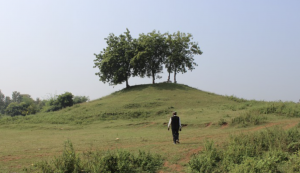
Hardolal Tekri, findspot of the inscription of Bhagadatta
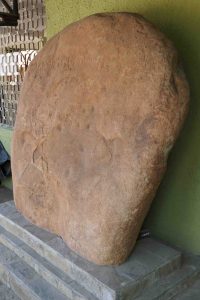
Megalith with inscription of Bhagadatta
Pauni (पौनि District Bhandārā) Maharashtra. Inscription (INNAG0033) of Bhagadatta on a stone megalith
Pauni (पौनि District Bhandārā) Maharashtra.
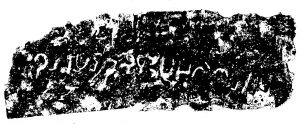
Inscription of Bhagadatta (inked impression). Note: The inscription is shown here upside down to match how the megalith is displayed in the Nagpur Museum.
Pauni (पौनि) stūpa railing pillar (OBNAG0009) with two inscriptions (INNAG0009-10)
Pauni (पौनि Bhandārā district) Maharashtra.
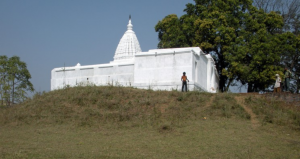
Site of stūpa with modern temple of Jagannāth.
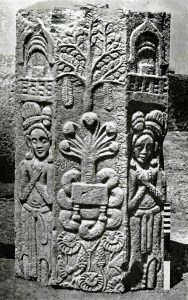
Pauni (पौनि) stūpa railing pillar (OBNAG0009) with two inscriptions (INNAG0009-10), as photographed in situ prior to removal to the National Museum of India.
Pauni (पौनि), stūpa railing pillar (OBNAG0008) with figures, architectural elements and an inscription (INNAG0008)
Pauni (पौनि Bhandārā district) Maharashtra. Site of stūpa with modern temple.
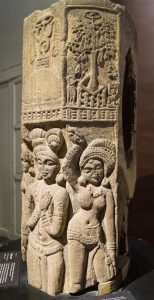
Railing pillar (OBNAG0008) from the stūpa, carved with figures, architectural elements and a donative inscription of Nāga.
INIG1326a Pārkanā Inscription of VS 1326a
INIG1326a jyeiṣṭha śudi 10 ravivāra Pārkanā (Guna). On a satī stone north of the village. Number of lines not given, nāgarī, local dialect. Damaged; seems to record the performance of satī at Pātaganā village by Vālha[ghā] probably the wife of paṁ˚ (i.e. paṁḍita) śrī Nāma.
INIG1234 Kadwāhā Inscription of VS 1234
INIG1234 Kadwāhā (Guna). On a ceiling slab in the maṭha. Number of lines not given, nāgarī, Sanskrit. Begins with obeisance to Gaṇapati; purport not clear. Refers to Gosurālaya.
INIG1223 Gudrī Inscription of VS 12223
INIG1223 āṣāḍha śudi 2 budhavāra Gudrī (Shivpuri). On a slab in a niche in a Jaina temple. Number of lines not given, nāgarī, corrupt Sanskrit. Purport not clear; mentions sādhu Ratna.
INIG1150 Gowalior Fort Inscription of VS 1150
INIG1150 Gwalior fort (Gwalior). Two slabs in the porch of the Sās Bahū temple. 22 lines (right side) + 21 lines (left side), old nāgarī, Sanskrit. Describes the construction of and donations to Padmanātha (i.e. Viṣṇu) by the Kacchapaghāta ruler Mahīpāladeva. The main kings of the Kacchapaghāta dynasty are given in the inscription as: Lakṣmaṇa and his son Vajradāman (who defeated the king of Kannauj and conquered Gopādri); Maṅgalarāja; Kīrtirāja and his son Mūladeva (known as Bhuvanapāla and Trailokyamalla) who married Devavṛttā; his son Padmapāla; his heir Sūryapāla and his son Mahīpāla Bhuvanaikamalla who was a brother of Padmapāla. Composed by Maṇikaṇṭa, son of Govinda and the grandson of Rāma; written by Digambara Yaśodeva and inscribed by Padma Siṁhavāja and Māhula, sons of Devasvāmin.
INIG1145 Dubkund Inscription of VS 1145
INIG1145 bhādrapada śudi 3 Dubkund (Sheopur). On a slab from the ruins of a Jaina temple. 61 lines, old nāgarī, Sanskrit. Genealogy of Kacchapaghāta mahārāja Vikramasiṁha. Arjunasiṁha, son of Yuvarāja, killed Rājyapāla (of Kannauj) at the insistence of Vidyādhara, the Candella ruler at Khajurāho. The son of Arjuna was Abhimanyu (in the time of Bhoja) and the son of Abhimanyu was Vijayapāla and that of Vijayapāla was Vikramasiṁha. Composed by Vijayakīrti son of Śāntiṣeṇa written by Udayarāja and incised by Tīlhaṇa. Now in the Archaeological Museum, Gwalior.
INIG1138 Kadwāhā Inscription of VS 1138
INIG1138 Kadwāhā (Guna). On a loose slab in the ruins of the maṭha. 4 lines, nāgarī, Hindi. Broken and not legible.