IN03078 Poḷonnaruva Häṭa-dā-gē Portico Slab Inscription
The inscription is engraved on the portico of the so-called Häṭa-dā-gē, ‘the Shrine of Sixty Relics’, at Poḷonnaruva. It was discovered by S. M. Burrows in 1885; Burrows also discovered two further inscription in the shrine itself (IN03079 and IN03080). The inscription dates from the reign of Kīrti-Niśśaṅka-Malla (1187-1196 A.D.) and consists of 23 lines, starting with a Sanskrit stanza in triṣṭup śālinī metre and ending in a Sinhalese quatrain. Both of these stanzas contain Niśśaṅka-Malla’s appeal to future kings to protect and preserve the Dharma. The rest of the inscription describes some of Niśśaṅka-Malla’s administrative and charitable acts, including the building in stone of the Vaṭa-geya (‘Rotunda’), the (Niśśaṅka-latā-maṇḍapaya ‘Niśśaṅka flower-trail hall’), and the Niśśaṅka-daḷadā-geya (‘Niśśaṅka tooth-relic house’) at Poḷonnaruva.
OB03057 Ruvanväli-Dāgaba Slab of Kīrti-Niśśaṅka-Malla

IN03077 Ruvanväli-Dāgaba Slab Inscription of Kīrti-Niśśaṅka-Malla
The inscription is engraved on the side of a fixed slab, which stands erect in a bed of brickwork, flanked by two monolithic pillars, within a few yards of the statues near the eastern altar of the Ruvanväli-dāgaba in Anurādhapura. It was discovered in 1874 by Nāranviṭa Thēra. The inscription consists of 35 lines in the Sinhalese alphabet of the twelfth and thirteenth centuries. It dates from the reign of Kīrti-Niśśaṅka-Malla (1187-1196 A.D.) and gives a general account of his various philanthropic and religious acts, mostly in Poḷonnaruva, his state visit to Anurāpura in his fourth regnal year, the lavish manner in which he worshipped the Ruvanväli-dāgaba there, and the steps he took to restore the Mīrisaviṭiya and other vihāras.
Copper plate of Mahendrapāla from Jagjivanpur জাগ্জিভানপুর
Jagjivanpur জাগ্জিভানপুর (Habibpur block, Malda district, West Bengal).

Copper plate of Mahendrapāla from Jagjivanpur (Habibpur block, Malda district, West Bengal).
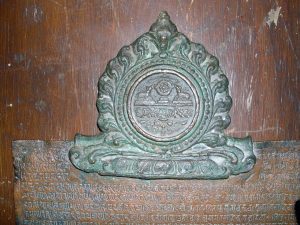
Jagjivanpur copper plate inscription of Mahendrapāla
Jagjivanpur copper plate inscription of Mahendrapala.
Ujjain stone inscription of Naravarman
Ujjain उज्जैन (Madhya Pradesh).
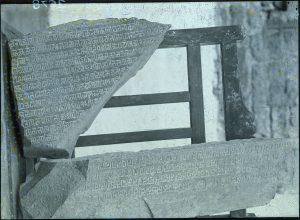
Two fragmentary Sanskrit inscriptions on black stone from Ujjain, Madhya Pradesh, unearthed in dismantling a house in the Town Improvement operations and preserved at the Madhava college. Photographed by the Gwalior State archaeology department in 1924-25, glass negative no. 227 of samvat 1981.
Working transcription by Saarthak Singh (2020)
Inscription I
1. ]vagāhya sarayūṃ jitvāśramaṃ sainikaiḥ sākētopavanāvanī-ṣukakali[
2. ]haklamaṃ nītē kāṃtaiḥ sahamalayaśailē-yuvatibhiḥ| yadātaṃkāllaṃkāvi[
3. ]vidānūnaṃ yēna himādrim-ūrdhviśi_lī vakrēlakāvagrahaḥ||18||[
4. ]19||tasmin viślaṣa-śruṣyattridi_purapunaḥ prītisatrōtsavā[
5. ]jaśiyēḥ saṃyati-prōtkhāyōtkiratōḍu-vibhrama-bhṛtō-mu[
6. ]da-gatayaḥ||22||vaivagya-vijayaśriyō-raṇa_[
7. ]pacayamāṇaḥ||nirvāṇa-nārāyaṇa-°i_[
8. ]lakēnāgā_iśaṃkōrddiśaṃ||24||[
9. ]riṇamaśṛaṇiṃtāhya-va_pī[
10. ]pālabhōlatthalī[
11. ]ṇamālili||[
12. ]…[
Inscription II
1. ]saṃvaya-śubhaṃ-yurajāyatōrvvī|ratna-prakara-jala-vayasya-saṃpat-prakaṣaghā-bhā_[
2. ]tā||269||tasminn-āvarjjita-surajana-prauḍhavarggē sudharmmā madhyāsīnē harati maghavat-svargga-sāmrājya-bhi[
3. ]ḥ saṃpadō na vyāpāra-gātiḥ kiyaty-apiba yasyā-liṃgituṃ śamyatē| maryādā pariṣa[…]°uyasyi[
4. ]makaṃ vivēkādurasi-śirasi-kaṃṭhē-nētrayōrādadhāti||273||yatpādāmbuja-nirmmita-praṇatayō gan_vvaṃ[
OB01012 Arang copper plates of Jayarāja
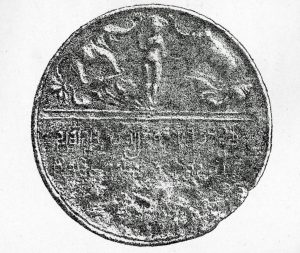
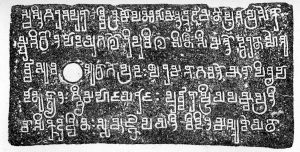
Arang copper charter of Jayarāja, seal and first plate
INIG1350a Surwāyā Inscription of VS 1350a
INIG1350a kārttika badi 7 budhavāra Surwāyā (Shivpuri). 23 lines, nāgarī, Sanskrit. Mentions the excavation of a well (vāpī) and the laying out of a garden (vāṭikā) by rāṇaka Cāciga, dharmaputra of the Yajvapāla king Gopāla and servant of Gaṇapati. Cāciga was of the Lubdhaka family (i.e. Lodhā). Composed by Māthura kāyastha Jayasiṁha, son of Lohaṭa and written by Mahārāja. Now in the collection of the Archaeological Museum, Gwalior.
INIG1349 Inscription of VS 1349
INIG1349 [Provenance not recorded, possibly from Morena district]. On a stone slab. 17 lines, nāgarī, corrupt Sanskrit. Mentions the construction of a tank by mahatā Jaitasiṁha of Lodhā family when Cāhamāna Hamīradeva was ruling Śakambara. Now in the collection of the Archaeological Museum, Gwalior.
INIG1348c Kolāras Inscription of VS 1348c
INIG1348c āṣāḍha badi 11, Kolāras (Shivpuri). On a satī stone. 3 lines, nāgarī, Sanskrit. Mentions a satī, apparently of the queen of Govindarāja.