OB01103 Carnelian intaglio with a standing figure
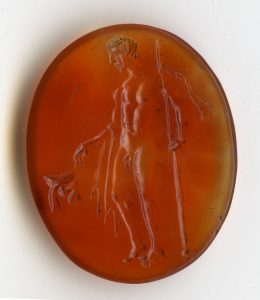
Engraved carnelian with a standing figure and inscription in one letter, British Museum 1897,0528.6.
Nalanda inscription of Vipulasrimitra
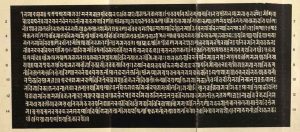
Nālandā (Bihār). Stone inscription of Vipulaśrīmitra.
Nālandā नालंदा inscription of Vipulaśrīmitra
Nālandā (Bihār). Stone inscription of Vipulaśrīmitra.
OB01102 Carnelian intaglio engraved with a Buddhist inscription (IN01102)
OB01102 Carnelian intaglio engraved with a Buddhist inscription (IN01102)
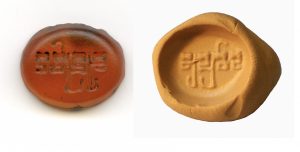
Engraved carnelian with inscription in Vākāṭaka-style script, British Museum 1892, 1103.126.
IN01102 Inscription on a carnelian gem
IN01102 Inscription in Vākāṭaka-style script on a carnelian gem with the Buddhist term apramāda.
OB03072 Poḷonnaruva Slab at the North Gate of the Citadel
IN03092 Poḷonnaruva Slab Inscription at the North Gate of the Citadel
The inscription covers both sides of a stone slab, which was found completely buried at the North Gate of the ruined citadel at Poḷonnaruva. The slab was subsequently placed in an upright position near the gate. There are 37 lines inscribed on the obverse and 36 lines on the reverse. Another copy of this inscription was found on a slab of similar size and shape at the East Gate of the citadel.
The inscription begins and ends with Sanskrit verses in śārdūla-vikrīḍita metre. The rest of the text is written in Sinhalese and displays the same bombastic style as other inscriptions of king Niśśaṅka-Malla, who reigned from 1187 to 1196 A.D. The inscription gives a panegyrical account of Niśśaṅka-Malla’s virtuous qualities and charitable acts, followed by an exhortation in which he advises his subjects to choose for their sovereign a prince or princess of his own Kāliṅga dynasty. He denounces vehemently the aspiration of the Govi caste and of the non-buddhistic princes from Coḷa or from Kēraḷa to the throne of Ceylon, emphasising these sentiments with the threat that all those who join them would be treated as traitors and would accordingly by extirpated together with their families and their worldly possessions. Wickremasinghe notes that the king’s appeal to his subjects to choose a sovereign from his own dynasty is similar to that given in the Galpota inscription (IN03081).
OB03071 Poḷonnaruva Slab of Niśśaṅka-Malla
IN03091 Poḷonnaruva Slab Inscription of Niśśaṅka-Malla
The inscription is written on the surface and sides of a stone slab. Wickremasinghe recorded in Epigraphia Zeylanica 2 (1912-27) that the slab was at the premises of the Archaeological Commissioner at Poḷonnaruva, to which it had be brought from “the spot where the present rest-house is”. The original site of the inscription is not known and the surviving text is incomplete. What remains of the inscription is a summary of the achievements of king Niśśaṅka Malla, similar to accounts found in other inscriptions of the same king and containing nothing new. Indeed, the text agrees almost word for word with the inner inscription on the Kiri-Vehera slab (IN03090) and with lines 10-12 of the Dambulla rock inscription (IN03032). It may be assumed that, following the established pattern of such inscriptions, the concluding lines of the present text revealed the specific purpose for which it was written. However, these crucial lines are missing. Wickremasinghe speculated that they might possibly be engraved on the reverse of the slab, which he had not seen.
OB03070 Poḷonnaruva Kiri-Vehera Slab

Kiri-Vehera Dagaba, Polonnaruwa