IN03069 Kukurumahan-Damana Pillar Inscription
The inscription is engraved on all four sides of a stone pillar. It was discovered by the Archaeological Commissioner, H. C. P. Bell, in September 1896. The pillar was lying almost embedded in the ground about thirty miles west-north-west of Anurādhapura in what is now the Vilpattu National Park. Bell erroneously identified the find-spot as Kukurumahan Damana (an identification repeated by Wickremasinghe) when it was in fact Mallimaḍu, according to C. W. Nicholas in the Journal of the Ceylon Branch of the Royal Asiatic Society (1963). The inscription consists of 73 lines in the Sinhalese alphabet of the 10th century A.D. It is dated in the eleventh of the reign of king Siri San̆g-bo and records the granting of certain immunities by the king and his Council in respect of Kereḷǟ-gama, a village belonging to the hospital built by the Commander-in-Chief Gēna opposite the nunnery called Mahindārāma on the High Street of the Inner City of Anuradhapura. Wickremasinghe argues that the biruda Siri San̆g-bo refers in this instance to Kassapa IV, whose reign lasted from 912 to 929.
Ujjain stone inscription of Naravarman
Ujjain उज्जैन (Madhya Pradesh).
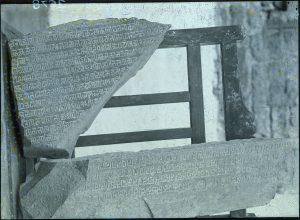
Two fragmentary Sanskrit inscriptions on black stone from Ujjain, Madhya Pradesh, unearthed in dismantling a house in the Town Improvement operations and preserved at the Madhava college. Photographed by the Gwalior State archaeology department in 1924-25, glass negative no. 227 of samvat 1981.
Working transcription by Saarthak Singh (2020)
Inscription I
1. ]vagāhya sarayūṃ jitvāśramaṃ sainikaiḥ sākētopavanāvanī-ṣukakali[
2. ]haklamaṃ nītē kāṃtaiḥ sahamalayaśailē-yuvatibhiḥ| yadātaṃkāllaṃkāvi[
3. ]vidānūnaṃ yēna himādrim-ūrdhviśi_lī vakrēlakāvagrahaḥ||18||[
4. ]19||tasmin viślaṣa-śruṣyattridi_purapunaḥ prītisatrōtsavā[
5. ]jaśiyēḥ saṃyati-prōtkhāyōtkiratōḍu-vibhrama-bhṛtō-mu[
6. ]da-gatayaḥ||22||vaivagya-vijayaśriyō-raṇa_[
7. ]pacayamāṇaḥ||nirvāṇa-nārāyaṇa-°i_[
8. ]lakēnāgā_iśaṃkōrddiśaṃ||24||[
9. ]riṇamaśṛaṇiṃtāhya-va_pī[
10. ]pālabhōlatthalī[
11. ]ṇamālili||[
12. ]…[
Inscription II
1. ]saṃvaya-śubhaṃ-yurajāyatōrvvī|ratna-prakara-jala-vayasya-saṃpat-prakaṣaghā-bhā_[
2. ]tā||269||tasminn-āvarjjita-surajana-prauḍhavarggē sudharmmā madhyāsīnē harati maghavat-svargga-sāmrājya-bhi[
3. ]ḥ saṃpadō na vyāpāra-gātiḥ kiyaty-apiba yasyā-liṃgituṃ śamyatē| maryādā pariṣa[…]°uyasyi[
4. ]makaṃ vivēkādurasi-śirasi-kaṃṭhē-nētrayōrādadhāti||273||yatpādāmbuja-nirmmita-praṇatayō gan_vvaṃ[
IN03068 Nǟgama Pillar Inscription
The inscription was found on a pillar in the premises of the mosque in Nǟgama, a village in Nǟgampaha Kōrale, about twenty-five miles south of Aurādhapura. It was examined by the Archaeological Commissioner, H. C. P. Bell, in 1895. The inscription originally consisted of 84 lines, divided equally between the four sides of the pillar, but the top two lines on each side are now missing, the top of the pillar having broken off. The text is dated to the seventh year of the reign of the king Siri San̆g-bo and records a grant of immunities to Koḷayunugama, a village which had been given by Udā Mahāpā to one (Ki)tambavä Mahayā as pamaṇu or ‘descendible’ property. Wickremasinghe suggests that the biruda Siri San̆g-bo refers in this instance to Kassapa IV.
OB03047 Tim̆biriväva Pillar
IN03067 Tim̆biriväva Pillar Inscription
The inscribed pillar was found at Tim̆biriväva, where it was examined by the Archaeological Commissioner H. C. P. Bell between 1898 and 1900. Tim̆biriväva is a small village in the Pahala Kälǟgam Tulāna of Vilacciya Kōrole, about twenty-three miles to the west-south-west of Anurādhapura. Written in Sinhalese alphabet of the 10th century A.D., the inscription covers three sides of the pillar and half of the fourth. It badly worn and illegible in places. The inscription is dated to the first year in the reign of Kassapa IV, called here by his biruda Kasub Siri San̆g-bo, and records immunities granted to the village Mibäḷi-gama attached to the Māḍbiyan-pirivena. The first twelve lines are almost word-for-word identified to those of the Moragoḍa pillar inscription of Kassapa IV (IN03059), which is dated fifteen years later.
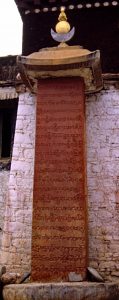
བསམ་ཡས། Bsam yas pillar inscription
བསམ་ཡས། རྡོ་རིང་།
OB03046 Noccipotāna Pillar
IN03066 Noccipotāna Pillar Inscription
The inscription was found at Noccipotāna, about one and a half miles from Galegama in Egoḍapattuva in the Tamankaḍuva district, some sixty miles south-east of Anurādhapura. It consists of 46 lines in the Sinhalese alphabet of 10th century A.D. engraved on three sides of a stone pillar. The inscription records a grant of immunities to the village of Mun̆uneḷuva-gama and is dated to the ninth year of the reign of Abhā Salamevan. It is therefore seven years later than the Kirigallǟva inscription of the same king (IN03065). Wickremasinghe suggests that the biruda Abhā Salamevan refers in this instance to Udaya I.