Amaravati Graffito 550 of 1907
IN00200 Ganj Inscription of Vyaghradeva
The Ganj stone inscription was located in 1919 by Rakhaladas Banerji. The inscription is inscribed on a loose slab lying close to the ruins of a structure which could possibly be a dam at the village of Ganj. The inscription is identical to the one found earlier at Nachnā-kī-talāi (IN00199). The inscription records the meritorious action of Vyāghradeva who is described in the inscription as meditating upon the feet of Pṛthivīṣeṇa. It is not been definitively proven whether the inscriptions refer to Pṛthivīṣeṇa I or Pṛthivīṣeṇa II. It is assumed that Vyāghradeva was a feudatory or officer under the Pṛthivīṣeṇa mentioned in the inscription.
IN00199 Nachna Inscription of Vyaghradeva
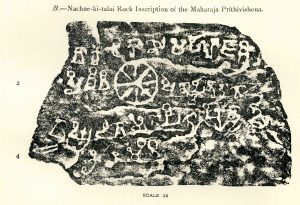
The Nachnā-kī-talāi stone inscription was located in 1883-84 by Alexander Cunningham. The inscription is inscribed on two sides of a loose slab which was found on the ground outside the fort of Kuṭhārā. The inscription is identical to the one found at Ganj. The inscription records the meritorious action of Vyāghradeva who is described in the inscription as meditating upon the feet of Pṛthivīṣeṇa. It has not been definitively proven whether the inscriptions refer to Pṛthivīṣeṇa I or Pṛthivīṣeṇa II. It is assumed that Vyāghradeva was a feudatory or officer under the Pṛthivīṣeṇa mentioned in the inscription.
IN00198 Nachna Unfinished Inscription of Vyaghradeva
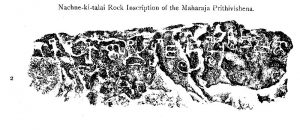
The Nachnā-kī-talāi stone inscription was located in 1883-84 by Alexander Cunningham. The inscription is inscribed on two sides of a loose slab which was found on the ground outside the fort of Kuṭhārā. The inscription is identical to the one found at Ganj. The inscription records the meritorious action of Vyāghradeva who is described in the inscription as meditating upon the feet of Pṛthivīṣeṇa. It has not been definitively proven whether the inscriptions refer to Pṛthivīṣeṇa I or Pṛthivīṣeṇa II. It is assumed that Vyāghradeva was a feudatory or officer under the Pṛthivīṣeṇa mentioned in the inscription.
IN00197 Ramtek Kevala Narasimha Temple Graffito 2
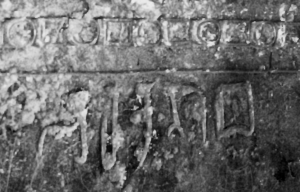
IN00196 Ramtek Kevala Narasimha Temple Graffito 1

IN00195 Ramtek Inscription of a Daughter of Prabhavatigupta
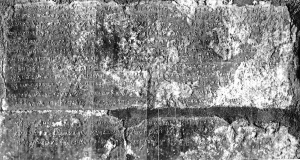
Memorial stone inscription discovered during cleaning undertaken by the Directorate of Archaeology and Museums, Maharashtra Government in the early 1980s. The inscription is carved onto stones fixed on the inside wall of the mandapa of the Kevala-Narasiṃha temple at Ramtek. The inscription records a pious action of an unidentified daughter of Prabhāvatī Guptā, during the reign of her brother Pravarasena II. However the inscription is damaged and a clear reading is not possible at this point in time.
IN00194 Bidar Charter of Devasena
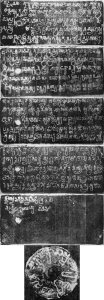
The location of the original five copper plates and their ring are no longer known, but iron reproductions of the plates were created by a Bidri worker in Bīdar when the plates were brought to him by a villager from the Bechchali tālukā of the Bīdar district. Although the original plates are untraceable, the iron copies give an accurate copy of the charter which records Devasena’s donation of the village of Velpakoṇḍā in ‘favour of one Raddochha, a scholar of the four Vedas’ (Shastri 1997: 108). The inscription was issued from Vatsagulma. According to Shastri (1997: 109), this is the only known complete official grant of Devasena. Shastri (1997: 110) also argues that this plate is important because it may prove that the Vatsagulma branch of the Vākāṭakas spread into Karnataka, as the ending of the named village in the inscription may suggest.
IN00193 Thalner Charter of Harisena
The Thālner copper plates, which consist of three inscribed copper plates with a ring, were acquired from a resident of Thālner by a blacksmith from Dhule. The plates date to the third year of Hariṣeṇa’s reign and are the only known official charter of the king, who was the last ruler of the Vatsagulma branch of the Vākāṭakas. The plates record the donation of two villages and some land to a group of Brāhmaṇas who were students of Sāmaveda.
IN00192 Hisse-Borala Inscription of Devasena
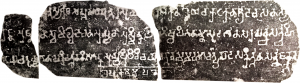
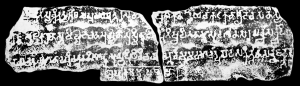
The four lined stone inscription was first published in 1963-64. It was discovered in what is considered to be a wall of ancient bricks which appear to have made a dam near the village of Hisse-Borālā. The inscription, which is dated to the reign of Devasena, contains a reference to the Śaka year 380 (i.e. A.D. 458-59), which is the earliest known reference to the Śaka era within the Vidarbha region. The inscription records the construction of a tank called Sudraśena by Svāmilladeva, an officer of Devasena.