Pauni Stone (OBNAG0003) with Inscription (INNAG0003)
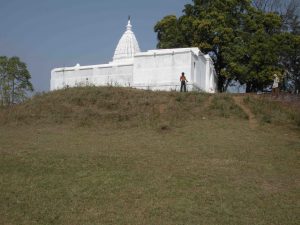
Pauni (पवनी Bhandara district), Maharashtra. Stūpa mound with modern temple.
Colour Picture of Stone Available (see image link).
Measurements available.
Pauni (पौनि District Bhandārā) Maharashtra. Inscription (INNAG0033) of Bhagadatta on a stone megalith
Pauni (पौनि District Bhandārā) Maharashtra.
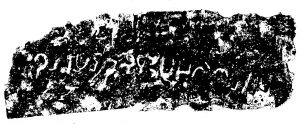
Inscription of Bhagadatta (inked impression). Note: The inscription is shown here upside down to match how the megalith is displayed in the Nagpur Museum.
Pauni Brahmi Inscription (INNAG0003)
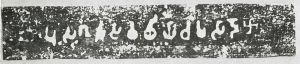
Pauni (पवनी Bhandārā district) Maharashtra. Donative Inscription.
Colour Picture Available under ‘Object’.
Pauni coping stone (OBNAG0002) with donative inscription (INNAG0002)
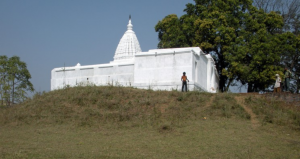
Pauni (पवनी Bhandārā district) Maharashtra. Stūpa site with modern temple.
Pauni Brahmi Inscription (INNAG0002)

Pauni (पवनी Bhandārā district) Maharashtra. Donative Inscription.
OB03027 Dambulla Cave Temple
.jpg)
IN03032 Dambulla Rock Inscription of Kīrti Niśśaṅka Malla
The inscription of king Kīrti Niśśanka Malla is situated in the rock temple of Dam̆bulla, also called in the Mahāvaṁsa Jambukōla vihāra, on the rock to the right, immediately after passing the Muragē. It consists of 25 lines, written in the Sinhalese script of the 12th century A.D., recording the philanthropic and religious acts of the king. No date is given in the inscription. According to Wicremasinghe, the inscription was engraved between 1192 and 1197. The present inscription was previously published in 1836 in the ‘Epitome’ of G. Turnour, and then in 1840 in ‘Eleven years in Ceylon’ of J. Forbes, and in 1883 in E. Müller’s ‘Ancient Inscriptions in Ceylon’.
OB03026 Anuradhapura Slab of Mahinda IV
IN03031 Anuradhapura Slab Inscription of Mahinda IV
The inscription of 49 lines is written in the same style and language than the two tablets of Mihintale (IN3030). It was engraved just a few months later than those ones, during the reign of the king Mahinda IV (975-91 A.D.). It records rules for the administration of certain lands and villages. It also contains an important mention of the temple of the Buddha’s ‘Tooth-relic’ (Daḷ-dā-ge), which enabled the identification of this temple, rebuilt by Mahinda IV in the centre of the town, as the ruined site known as the Daḷadā Māligāva, situated south-east of the Thūparāma dāgäba.